
Learning Pilates is much like learning any skill you hope to understand, enjoy, and practice for many years.
By now, you already know that it doesn't happen all at once.
You don't simply "do" Pilates.
You study it. 🙂
As you practice, you gradually develop the skills that allow you to perform each movement with greater awareness.
Because progress begins with awareness.
Once you become aware of what your body is doing, precision becomes possible.
Precision gives you control.
Control builds confidence.
And confidence allows you to continue progressing safely while experiencing the long-term benefits Pilates has to offer.
When people think about progressing in Pilates, they usually think about moving from Beginner to Intermediate and eventually to Advanced levels.
But there is another progression that's just as important.
Your own level of understanding.
Every Pilates exercise asks something of both your body and your mind.
Can you stabilize your pelvis while your legs move?
Can you support your shoulders while your arms move?
Can you breathe while maintaining abdominal support?
Can you coordinate all of those skills while remembering the choreography?
Those are the questions that determine whether you are truly ready for the next, more challenging exercise.
That's why I often say there are really two levels of progress happening simultaneously.
One is the level of difficulty of the exercise.
The other is your level of comprehension.
As your body becomes stronger, more mobile, and better coordinated, your understanding of how to move it efficiently should grow alongside it.
Those two levels need to stay in balance.
When an exercise feels overwhelmingly difficult, it may be because your body hasn't yet developed the strength, flexibility, mobility, or coordination it requires.
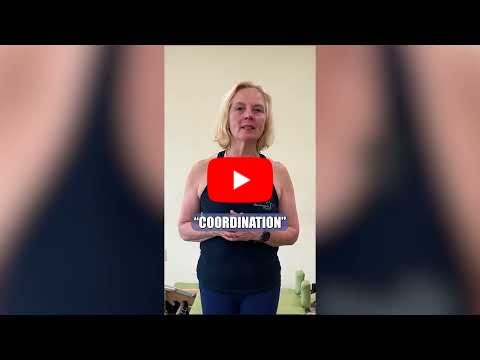
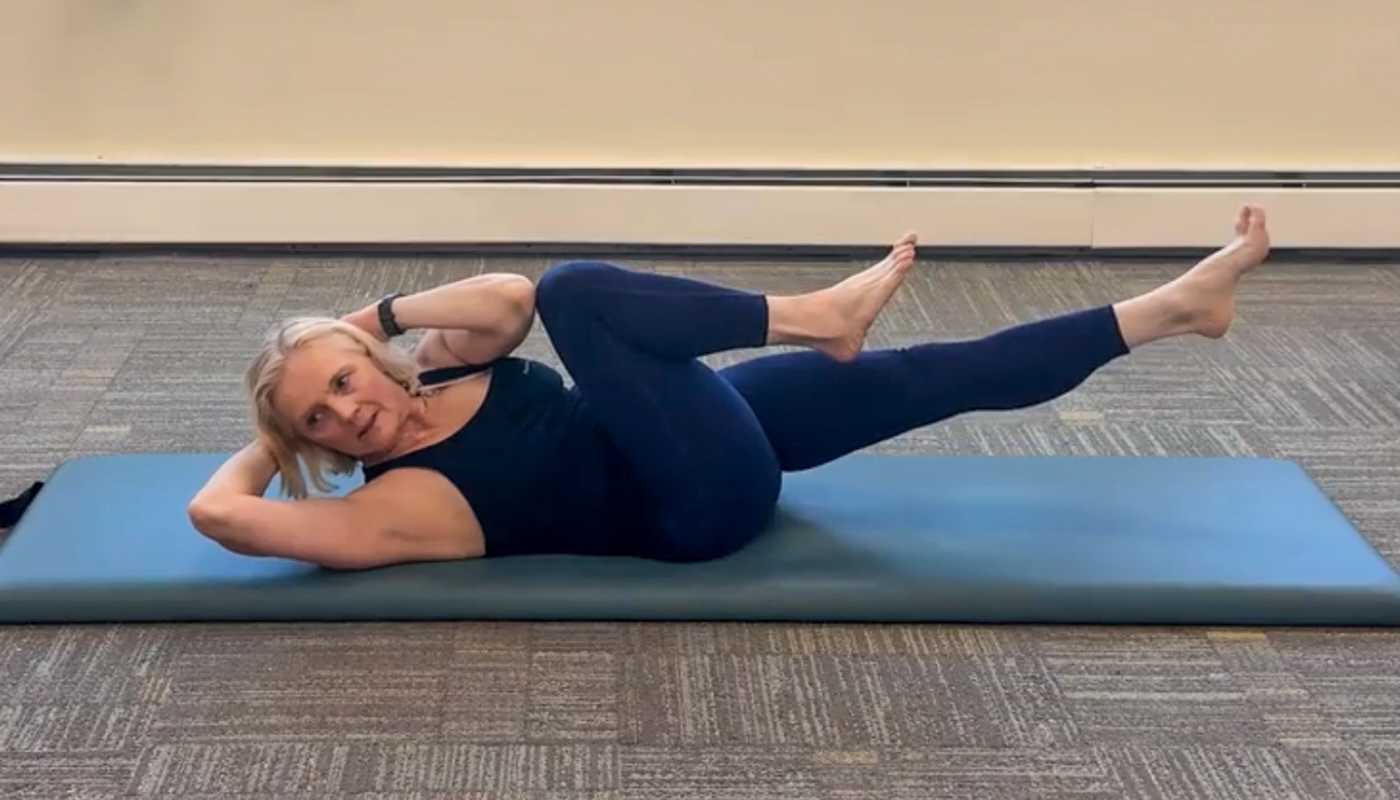
Take Coordination, for example.
Although it's considered an intermediate-level exercise, it requires timing, control, awareness of the springs, continuous support of the head and neck, and the ability to stabilize the pelvis while the legs move.
If you are already practicing it, you know this to be true.
It challenges all of those skills I mentioned above every time you perform it.
Surprisingly, the opposite can also be true.
When an exercise looks simple or feels easy, it's tempting to assume you've mastered it.
But that's often when your deeper learning begins.
Your awareness of what your body is doing increases, and your understanding of what the exercise is asking of you becomes much clearer.
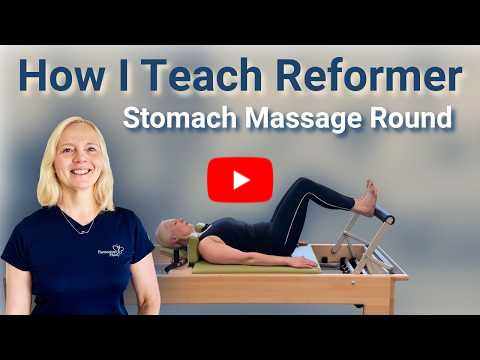
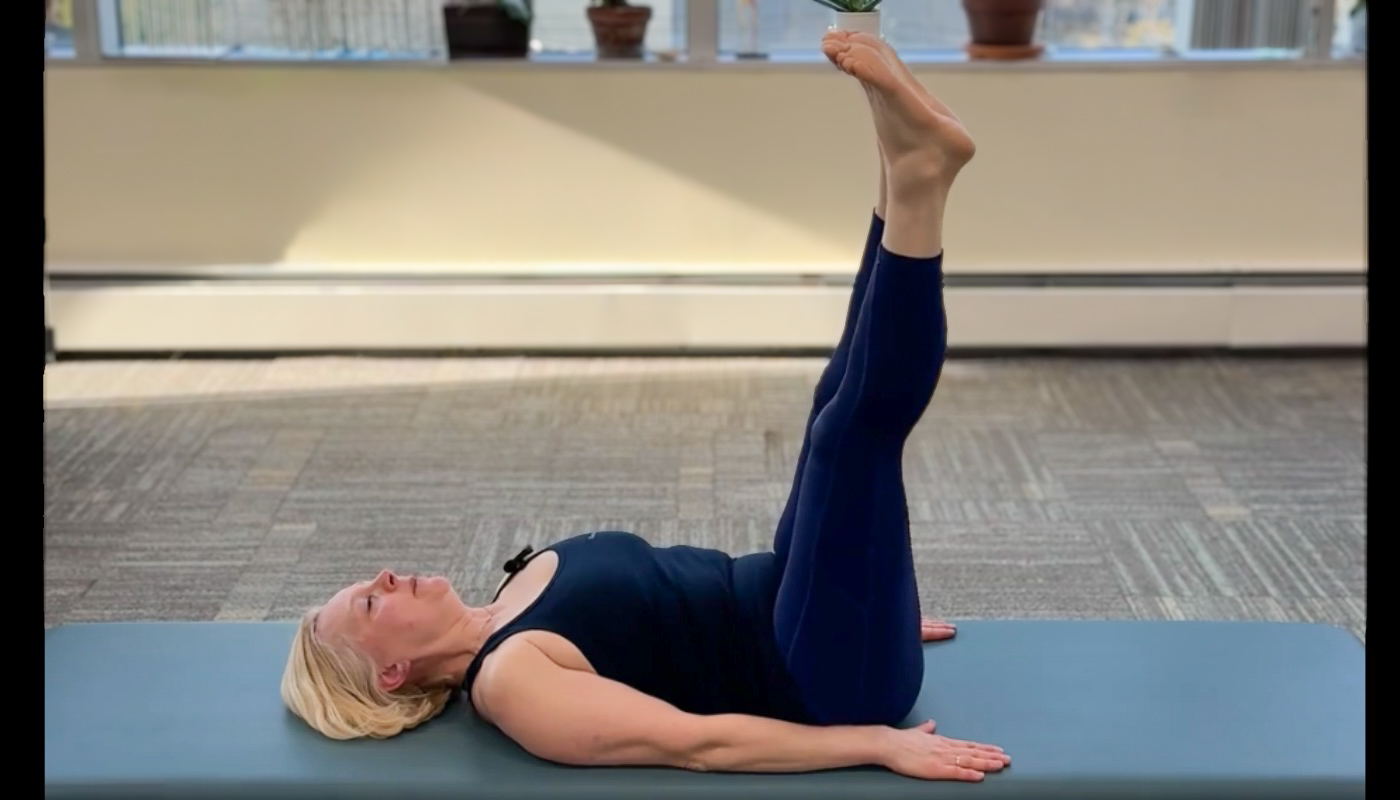
Stomach Massage Round is a great example.
It's introduced much earlier in the repertoire, that Coordination. The choreography is rather simple, but to be able to get your body in this position you need certain mobility in the hips, knees, ankles, and lower back, along with an understanding of how to position your pelvis and bend your spine forward in a safe manner.
That's why I still spend time teaching fundamental concepts even to clients who have been practicing Pilates for years.
We revisit pelvic tilts. We also practice pelvic and shoulder stability.
I hope you do the same. :)
Because while the choreography of the exercises in classical Pilates method stays the same, what changes is your understanding, and ability to correctly position your pelvis and stabilize your shoulders during each movement with better outcome.
Every time you revisit an exercise, you notice something you didn't notice before.
That's progress.
That's understanding.
And that understanding can be applied to more advanced exercises that have more complex choreography.
Because the goal isn't simply to "do" more advanced exercises.
The goal is to become more aware of how your body moves so that every exercise that you perform becomes more effective and, ultimately, more valuable to your long-term physical well-being.
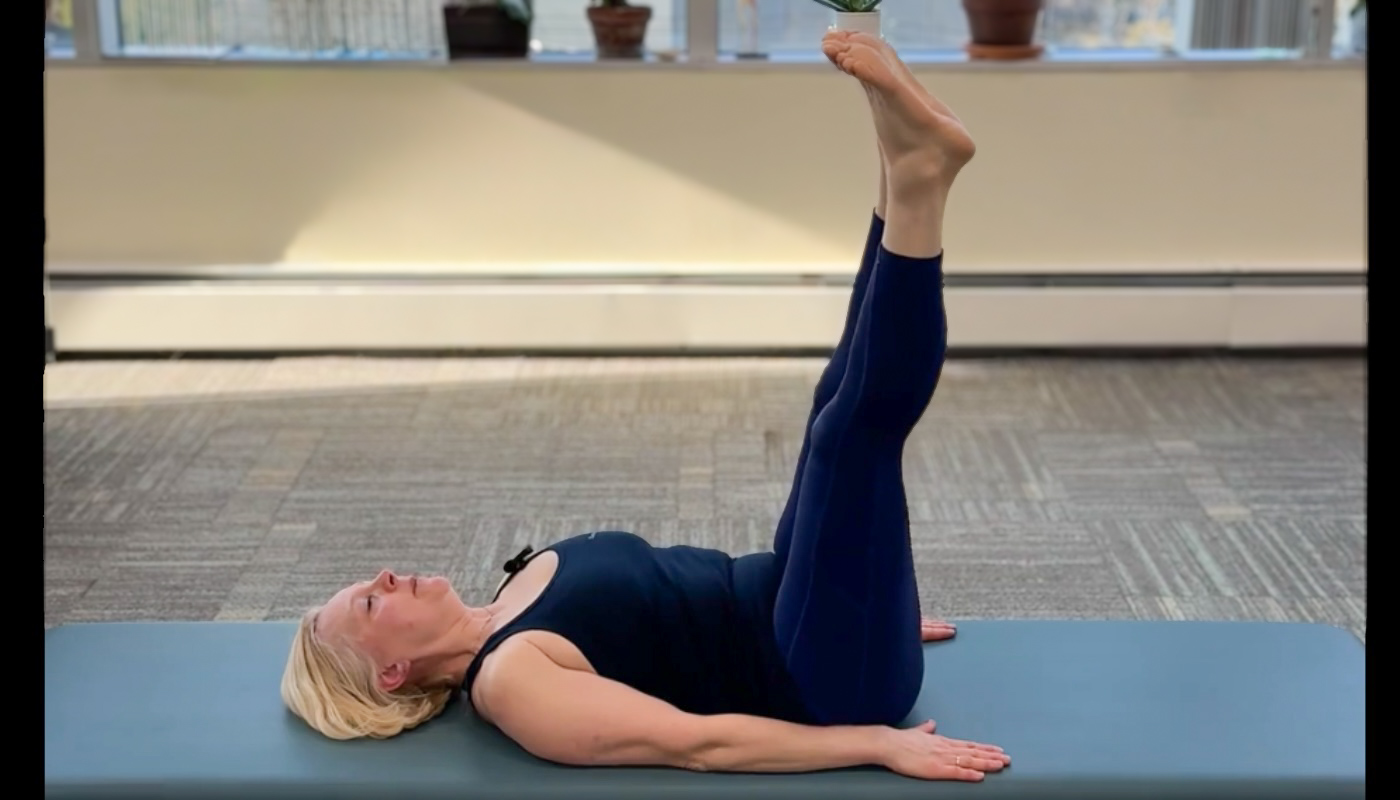
The two videos below illustrate this well.
Different exercises. Different levels of proficiency. The same principle.
As your understanding grows, so do the benefits Pilates offers.
Your increasing body awareness is what turns exercises into lifelong movement skills for you.
And that is how you measure your progress.:)
To Your Health,
Joanna
|
|
https://www.youtube.com/@classicalpilatesformodernlife
https://www.facebook.com/profile.php?id=61584908776724

Responses