
An inside joke and thoughts it inspired. 🙂
After the fire in our old building forced us to move to a new studio, we had to replace all the equipment. Among them was the High Barrel.
Our new Barrel has something our previous one didn't: numbers etched into the tracks from 1 to 11. The barrel slides along these tracks and can be positioned at different settings.
I use the High Barrel often to teach exercises such as Swan, Ballet Stretches, or Side Bends. And for each exercise and each client, the barrel needs to be adjusted to fit each person.
After I started using it, I quickly realized something. There was no way I could remember everyone's exact setting. I could guess approximately where someone needed to be, but I could easily be off by one number.
So I decided it would be much better if my clients remembered their own numbers. It saves time, makes setting up the equipment easier, and, what I realized I liked most, it gave them another way to be responsible for their practice.
And that's how I started asking this question.
These days, I often don't even get a chance to ask: “Do you know your number?”
Some clients walk over to the Barrel and announce their number before I say a word. Others simply adjust the Barrel themselves. :)
What started as a practical solution reflects how I want my clients to learn. I challenge them every day to take ownership of what they are doing. It’s definitely not a linear process, but it helps to have a teacher keep one accountable.
What about you? Do you have someone that keeps you accountable in your Pilates practice?
What about when you are in a group class?
It's easy to look around and follow what everyone else is doing.
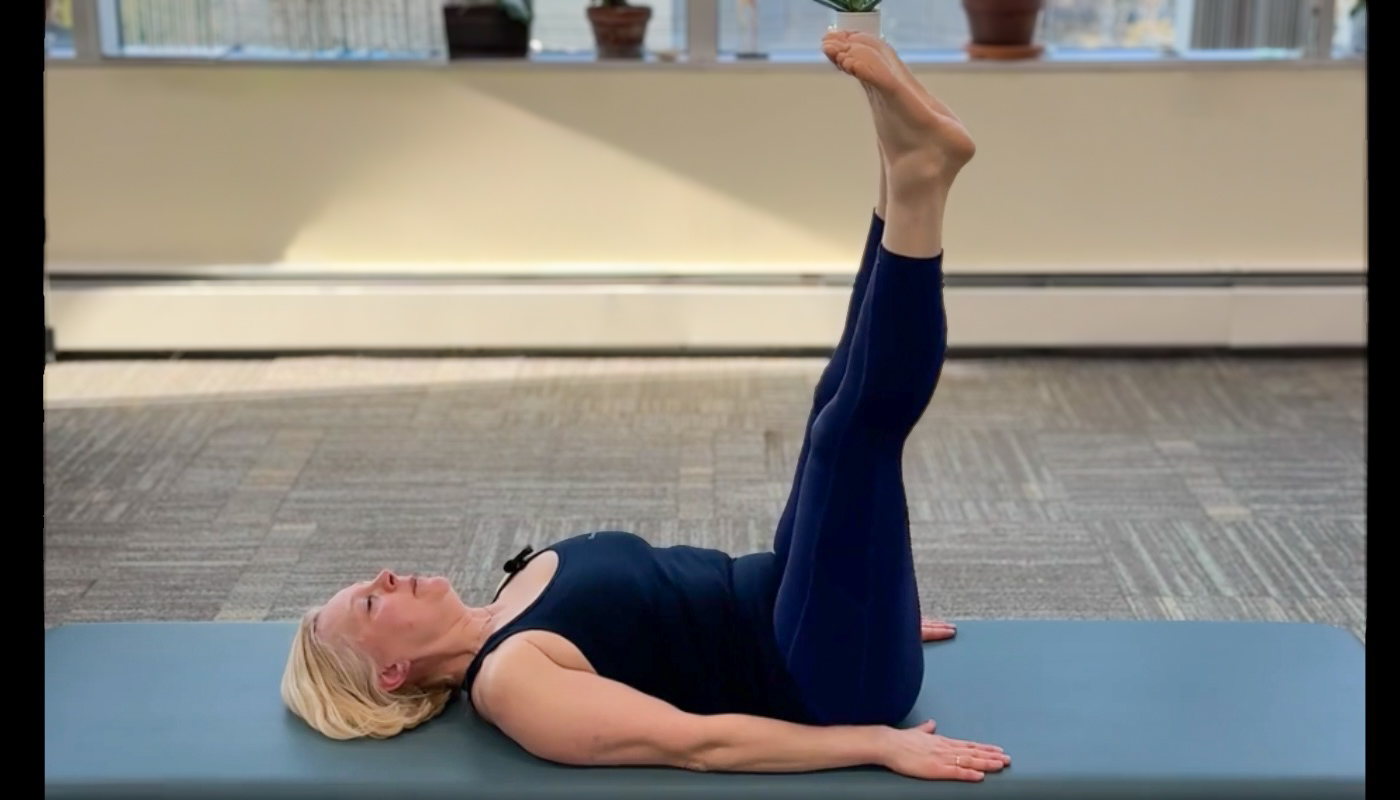
If the person next to you keeps their straight legs close to the floor during the Hundred, you might feel compelled to do the same, even though you are struggling to keep your pelvis and lower back stable.
If everyone is performing a large backbend in Swan, you might assume that's what you should be doing, too.
But just because someone else can perform an exercise a certain way doesn't mean it's the right way for you to perform it.
So Let's Take a Closer Look at Swan
It is an effective way to develop strength and mobility in the upper and mid back. It is also frequently misunderstood.
Some people are reluctant to practice Swan because they experience discomfort in their lower backs when attempting it.
I used to be one of them. :)
During my teacher training at The Pilates Center all those years ago, I was the only person in my group without a dance background. My spine was healthy, but it wasn't as mobile as those of my fellow trainees.
At first, I was simply trying to make the shape, and each time I tried, my lower back hurt.
But when I understood that I needed to align my pelvis with my spine, lengthen my lower back muscles, and then initiate the movement from my upper back, the difference was night and day.
I started enjoying Swan. And I still do. Over the years, the back extension exercises have become easier, and I've gained more range.
But I needed to understand what to do in my own body in order to improve.
So when I teach Swan, my priority is to help the client organize and stabilize the pelvis and lower back so that the movement can progress through the rest of the spine.
Initially, the movement may be very small.
And that's perfectly fine.
Because the goal isn't to just lift higher. It's to develop the strength, mobility, and control that allow the spine to extend without compressing the lower back.
As those abilities improve, the movement can become larger.
But trying to make it larger before you have the necessary control can prevent you from getting the benefits this exercise is intended to provide.
Think about that for a moment.
You could perform an impressive-looking Swan and still miss some of the benefits the exercise is intended to provide.
Or you could perform a much smaller Swan, with careful organization and control, and accomplish exactly what your body needs.
It's Not About Doing Less
When you know what your body is capable of, and understand where you are today, you can work toward making meaningful changes.
A smaller movement isn't necessarily an easier movement.
A larger movement isn't necessarily a better one.
What matters is whether you are performing the exercise in a manner consistent with what your body can do at this moment. With this approach, you are working on improving the strength, mobility, flexibility, and control you need in order to progress.
When you understand what you are trying to accomplish, you can make better decisions about how to move.
You become less concerned with keeping up with everyone around you and more interested in the quality of your own movement.
You begin to recognize when you are working effectively and when you are “making shapes.”
And you develop a better understanding of your body.
So, Do You Know Your Number?
In my studio, my clients know their number on the High Barrel.
But what I really want them to develop is the ability to recognize their capabilities, understand the purpose of an exercise, and know how to work toward that purpose.
Because the goal isn't to perform Pilates the way someone else does.
It's to learn how to perform Pilates effectively with the body you have today, while continuing to develop what that body is capable of doing.
Here are some questions you may use as a starting point the next time you practice:
- Am I clear on the goal of this exercise I’m about to perform?
- Do I understand how to organize my body to move through this exercise?
- Am I giving up control just to make a movement bigger?
And if you are the teacher:
- Am I helping my clients become more independent in their practice, or more dependent on me?
- Am I guiding my clients to better understand what their bodies are capable of?
- Do I explain the purpose of each exercise?
- Do I teach my clients to recognize when making a movement bigger isn’t in their best interest?
Good teaching and good practice have something in common: both lead to independence.
To Your Health!
Joanna
PS.
If Swan is an exercise you've struggled with, or you'd simply like to understand it better, I've included it in my Exercise Library here.
I break down exercises that are often misunderstood or difficult to perform, explaining how I approach teaching them so my clients understand the goals and improve their movements.
Ask me...
What have you always wanted to ask about ? There are no questions too basic. I may use yours as the starting point for a future newsletter.:)
Our website:
 |
Thank You.

Responses