
To Do Pilates Is to Constantly Explore Your Range of Motion (ROM)
In Pilates, every movement is an opportunity to explore your range of motion (ROM) - which is the amount of movement available at a joint in a particular direction.
However, movement for movement's sake is not the goal.
Instead, we strive to control our movements. Being aware of what to do and how to do it helps us achieve long-lasting, meaningful results.
So, how big should your movements be?
This is a question I get asked often, especially when I'm teaching exercises that require moving the arms or legs, for example, Leg Circles and Arm Circles.
The Answer Is:
It depends on your ability to maintain stability and control.
What does that mean for your Pilates practice?
It means that you should move only within the range of motion that allows you to meet the objective of the exercise:
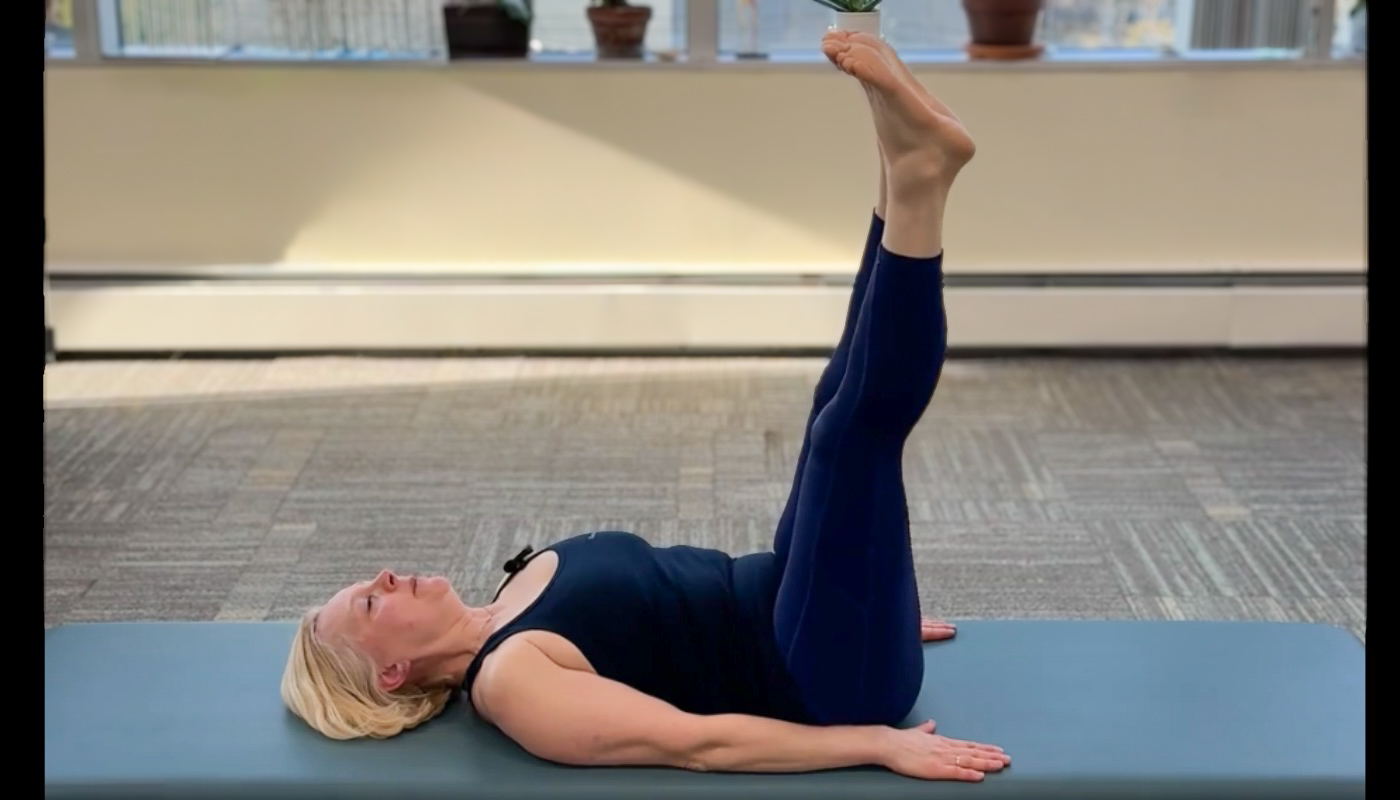
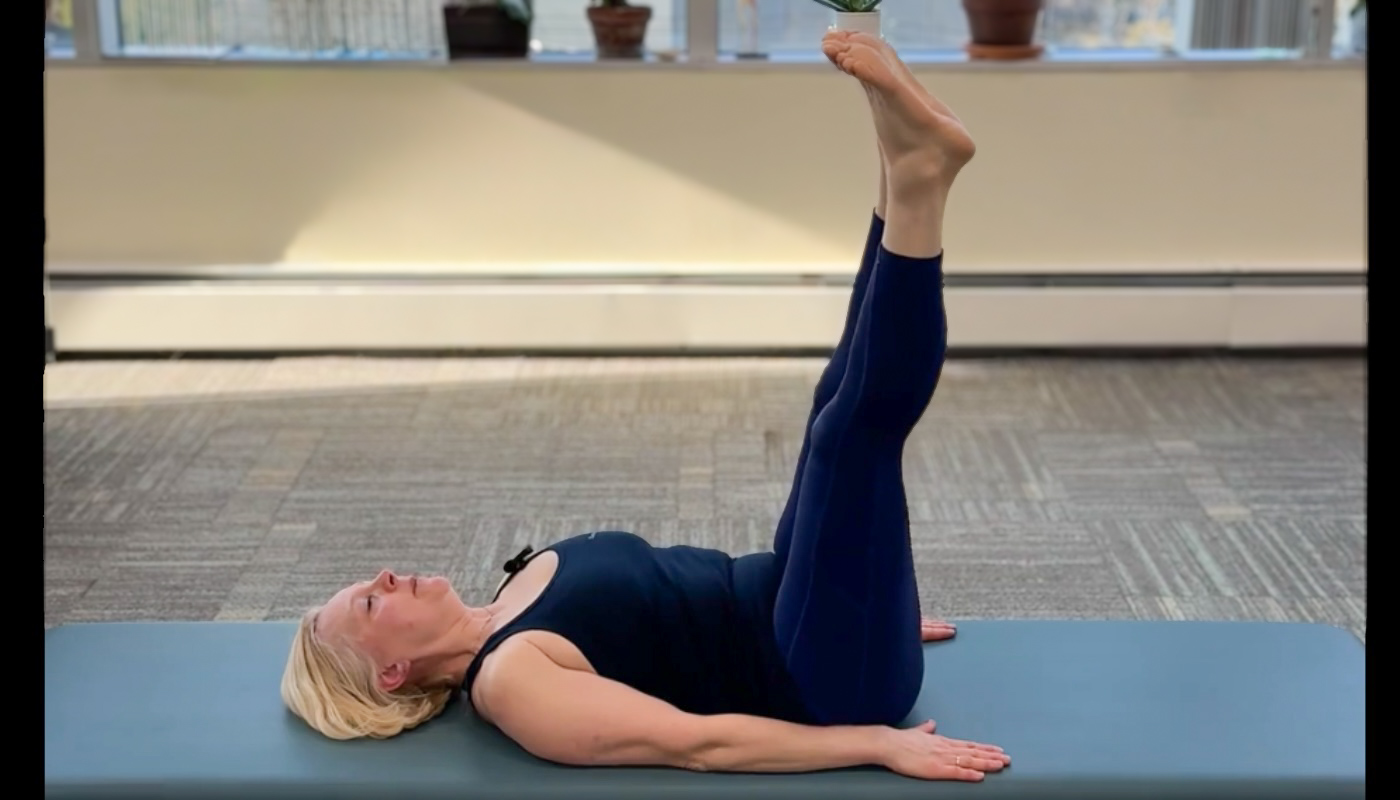
When moving the legs: stabilize the pelvis and lower spine.
When moving the arms: organize the rib cage and shoulder girdle while allowing the arms and shoulder blades to move.
This may sound simple, but as you may have already discovered, executing it requires practicing the movements consistently and with precision.
Why?
Because most of us are conditioned to believe that bigger is better, even when it comes to movement.
But in Pilates, smaller can be smarter. It's how we develop the control that allows our to move within the actuall range of motion we have and improve it over time.
Movement Is a Process of Exploration
Think of Pilates as a moving meditation, one where exploration, is the goal.
Let go of preconceived notions that the you rmovement has to be big.
Let your ability to stabilize and control your joints determine your range.
Start small. Build mental awarness to build muscle strength. Let your range of motion expand naturally over time.
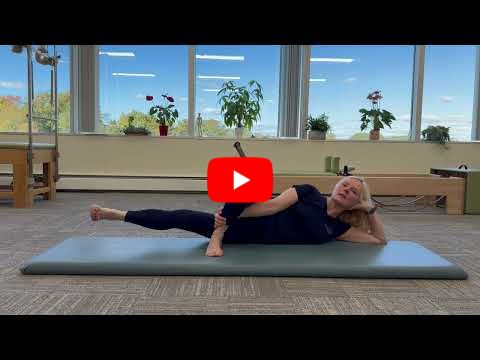
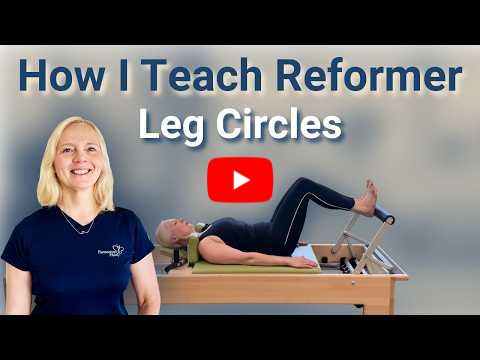
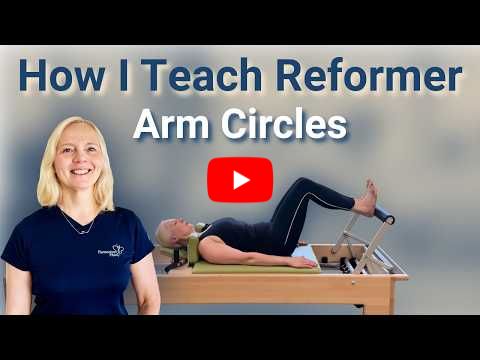
The next time you are practicing Sidekicks on the Mat, Leg Circles, or Arm Circles on the Reformer, approach it as an opportunity to explore. Take time, notice, correct, than move.
Here is how I explain it and practice these exercises myself. :)
And when YOU practice them, Instead of asking - "How big can I make this movement? ",
ask - "How much can I really move while maintaining the organization this exercise requires?"
|
|
|
Your answer may be different today than it will be six months from now.
Why?
Because as you practice, you develop strength, mobility, coordination, and body awareness, you become better at stabilizing one part of your body while allowing another part to move.
For example, your perception may be that you are able to make very large circles with your legs today, but you may not realize that this is possible only because your pelvis moves with them.
If you make the circles smaller and learn to stabilize your pelvis, over time you may be able to gradually increase the size of the circle without losing that stability.
The same applies to your arms. You may be able to take your arms all the way over your head, but if doing so causes your rib cage to lift or your shoulders to unnecessarily hike toward your ears, that may not yet be your most controlled range for that particular exercise.
With practice, that can improve.
That's why your range of motion isn't a fixed number. It's a movement skill you explore and develop as your ability to control your body in motion improves.
To Your Health:)
Joanna
Visit Our Website below
 |
Explore our YouTube channel
 |
Join our Facebook page here
https://www.facebook.com/profile.php?id=61584908776724

Responses