
Once you stop comparing yourself to a fictional “perfectly symmetrical person,” you can begin training your body as it is. That perspective shift will be a turning point in your practice.
The Attributes of Pilates: Symmetry, Asymmetry, and the Path to Uniform Development
Over the years, I’ve watched the same moment unfold with hundreds of clients—no matter their age, mobility, or level of mind–body connection. They begin moving through the classical choreography, and at some point an exercise quietly exposes a truth:
Their right and left sides do not behave the same way.
One leg circles more freely.
One hip rolls down sooner.
One arm manages the strap with more control.
One side coordinates movement more easily than the other.
And immediately, their expression shifts.
They assume something is wrong with them.
-
“My left leg is so much weaker.”
-
“My left side never does what I want it to.”
-
“Is everyone else this uneven, or is it just me?”
There is always that quiet dissatisfaction that their body is somehow flawed or less capable than other peoples.
And every time, I say how it is:
I have never met a person who's right and left sides are identical. Not once.
Not in strength.
Not in flexibility.
Not in coordination.
Not even in basic movement patterns.
People often believe their imbalance is unique—out of worry, frustration, or the assumption that everyone else “moves normally.”
The reality is much more obvious.
Asymmetry in movement is human.
Pilates does not create it—Pilates reveals it.
And once revealed, Pilates gives you the structure to change it.
This is where the Method becomes transformative.
It uses both symmetrical and asymmetrical exercises on purpose - to move the body toward what Joseph Pilates saw as the ultimate goal of his work:
uniform development.
Why Classical Pilates Works: The Relationship Between Symmetry and Asymmetry
Even though the human body is built symmetrically, we do not live our lives "symmetrically".
We favor one leg when we stand.
We carry our bag on one dominant shoulder.
We cross the same leg over the other.
We turn more easily to one direction.
We walk, sit, work and sleep with deeply ingrained patterns.
These patterns are not flaws—they are simply the outcomes of us living our lives.
Pilates works so well precisely because it exposes these patterns and gives you the tools to reorganize them.
The Method does not ask the body to imitate an aesthetic ideal. Instead, it teaches you how to distribute load more evenly, move more efficiently, and build strength and mobility without compensation.
Once you stop comparing yourself to a fictional “perfectly symmetrical person,” you can begin training your body as it is. That perspective shift is often the turning point in someone’s practice.
Exercises that “show and tell”.
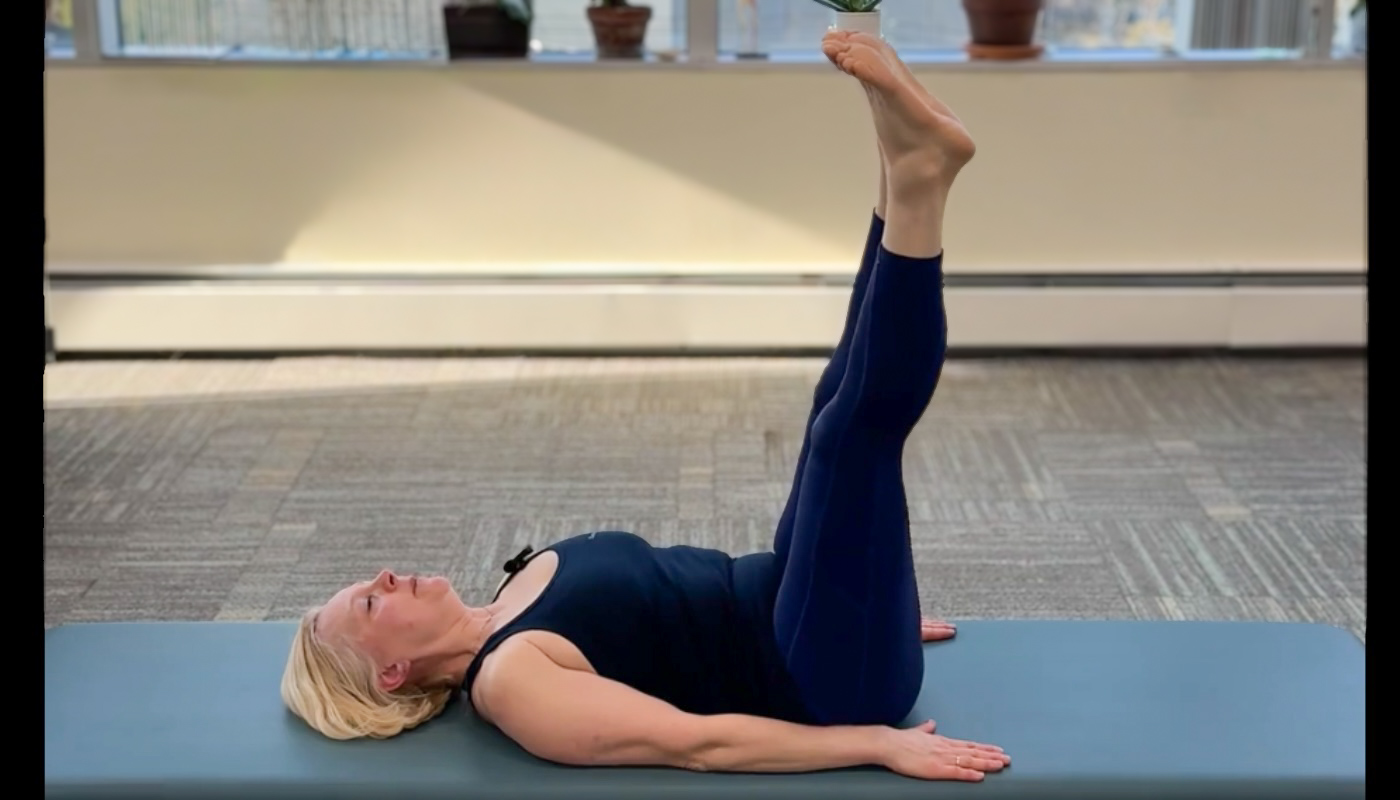
A large portion of the Classical Pilates includes the exercises where both arms or both legs move at the same time. Such as Hundred, Footwork, Leg Circles, Frog, Arm Circles, Chest Expansion, Roll Down, Tower and, of course, many more.
They teach you how to:
-
Stabilize the pelvis to stabilize the low back joints
-
Stabilize the ribcage to stabilize the neck and shoulders
-
Access deep abdominal muscles as stabilizers
The nuance is that symmetry in movement does not equal symmetry in effort.
Even when both legs move at the same time:
-
One side initiates the movement with more power.
-
One side stabilizes more effectively.
-
One side fatigues sooner.
-
One side leads.
Symmetrical exercises reveal these differences, if you slow down to notice. They show the pattern of your movement, and reveal the underlying muscle imbalances.
Asymmetrical Exercises: Tools to fix what’s not working.
If you look closely, you may be surprized to find that it is not the Reformer, but Mat and Chair that are the two Pilates “tools” that include a large array of asymmetrical exercises. Here are some examples to look at:
Mat
-
Single Leg Circles
-
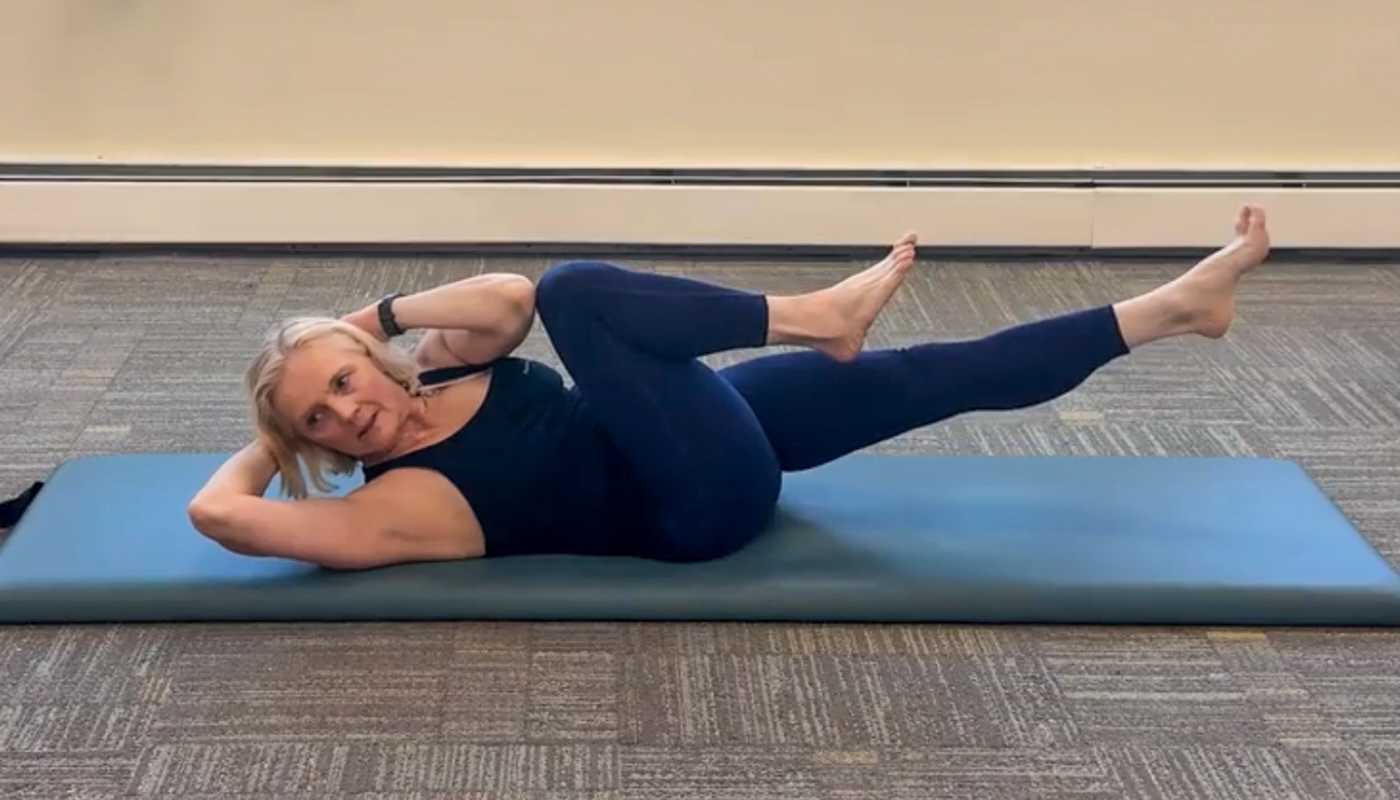
Single Leg Stretch
-
Scissors
-
Single Leg Kick
-
Shoulder Bridge with Kicks
-
Sidekicks
Chair
-
One-Leg Pumping on the Chair
-
Climb the Mountain
-
Up and Down
-
Straight Leg Press
-
Sitting Twist
Here, we work with one side at a time, so the difference in mobility and stability of our right and left shows up. We notice:
-
Differences in right and left leg and arm strength
-
Differences in right and left hip and shoulder stability/mobility
-
Differences in trunk mobility when rotating right or left
-
Differences in control while moving
Once you see these issues clearly, you can begin training your body with intention.
Uniform Development: The Heart of Pilates
Joseph Pilates emphasized that the purpose of his Method was to develop the body “uniformly.”
Uniform development is the integration of strength, flexibility, balance, and coordination across the entire system—functionally, structurally, and neurologically.
Here’s what that actually means:
Functionally:
Muscles share the workload instead of relying on habitual overuse patterns. You stop perpetuating the same movement habits and start working right and left with the same diligence. Whether it is the legs, arms or trunk.
Structurally:
The spine and joints maintain healthy alignment under movement and load. No area receives more stress simply because another failed to support it.
Neurologically:
The brain learns to recruit the right muscles at the right time. Coordination improves, and movement becomes easier to execute correctly, and ultimately it becomes more efficient.
Symmetrical exercises give you the structure.
Asymmetrical exercises give you the feedback.
Over time, the two together develop a body that works efficiently in every direction.
And the benefits are real:
-
Improved gait
-
Better balance on uneven surfaces
-
Relief from one-sided tightness and strain
-
More stable hips, knees and ankles
-
Even distribution of muscular work throughout the body
-
A spine that is supported
-
Increased confidence in performing everyday physical tasks
This is the practical value
Why The Mat Matters: The Classical Mat is a Complete System That You Should Practice at Home.
When you practice the sequence in order—at any level (Beginner, Intermediate, or Advanced)—you naturally move through:
-
Exercises that show your movement patterns
-
Exercises that reveal your imbalances
-
Exercises that challenge each side independently
This is why the Mat is so transformative.
Even if you can only perform the first few exercises, you are already addressing:
-
Right–left differences
-
Imbalances in strength
-
Mobility restrictions
-
Stability deficits
-
Coordination challenges
Whatever level you are practicing—that sequence is your workout. It gives you everything you need to start moving toward uniform development, one repetition at a time.
Challenge for this Week:
Practice the entire Mat sequence twice this week, whatever level you are at.
As you move through the sequence, observe:
-
Where one side leads
-
Where one side hesitates
-
How coordination changes from right to left
Remember: practicing at home fuels your awareness. And awareness empowers you.
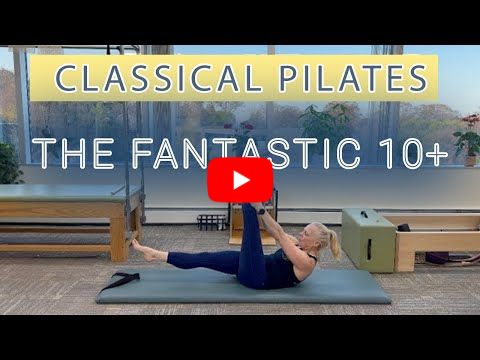
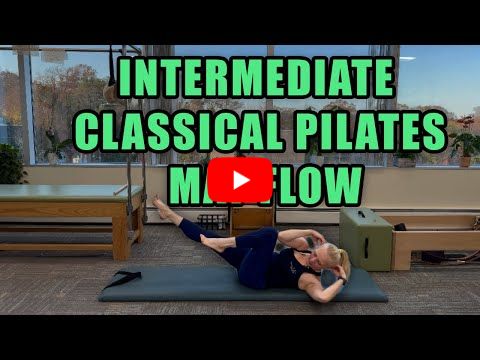
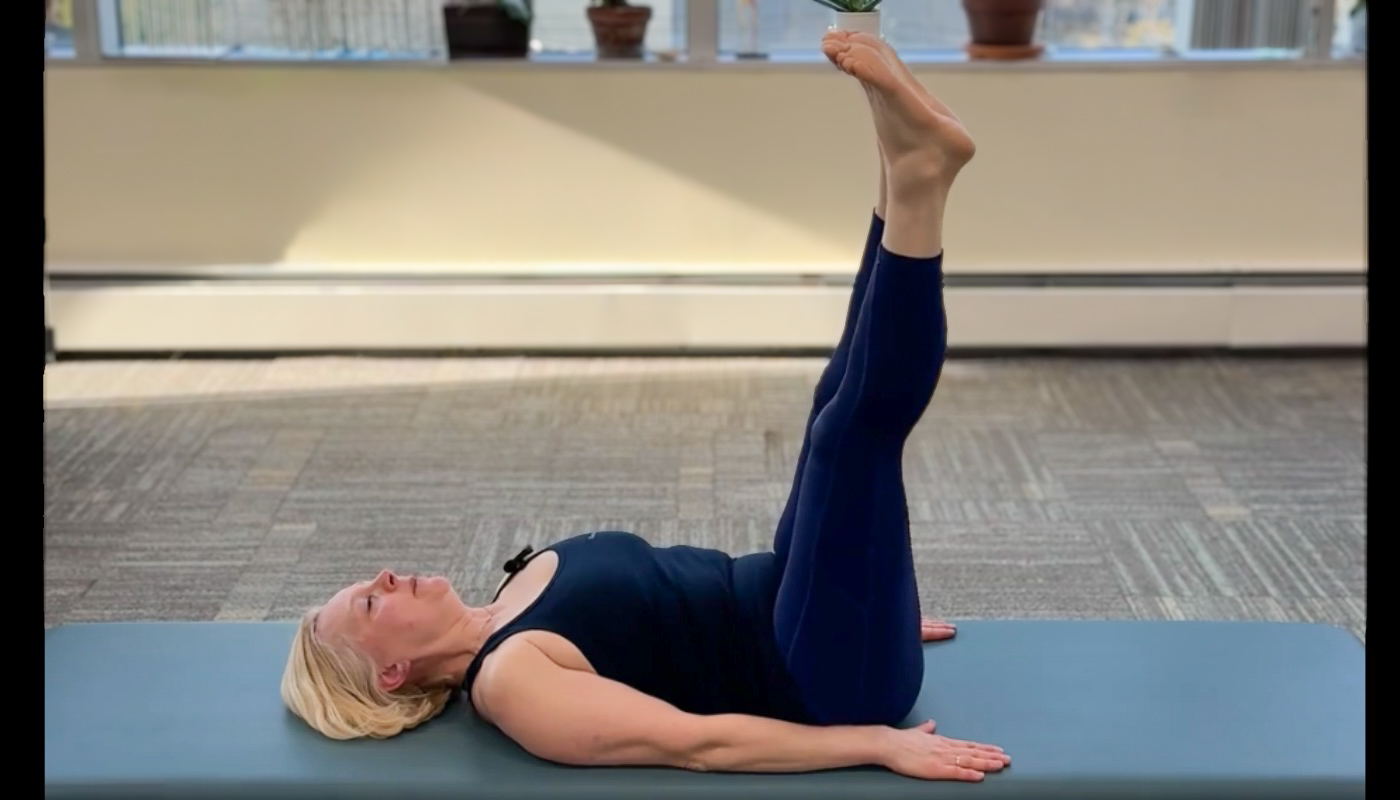
To assist you in your at home practice here are some tutorials:
|
|

Responses